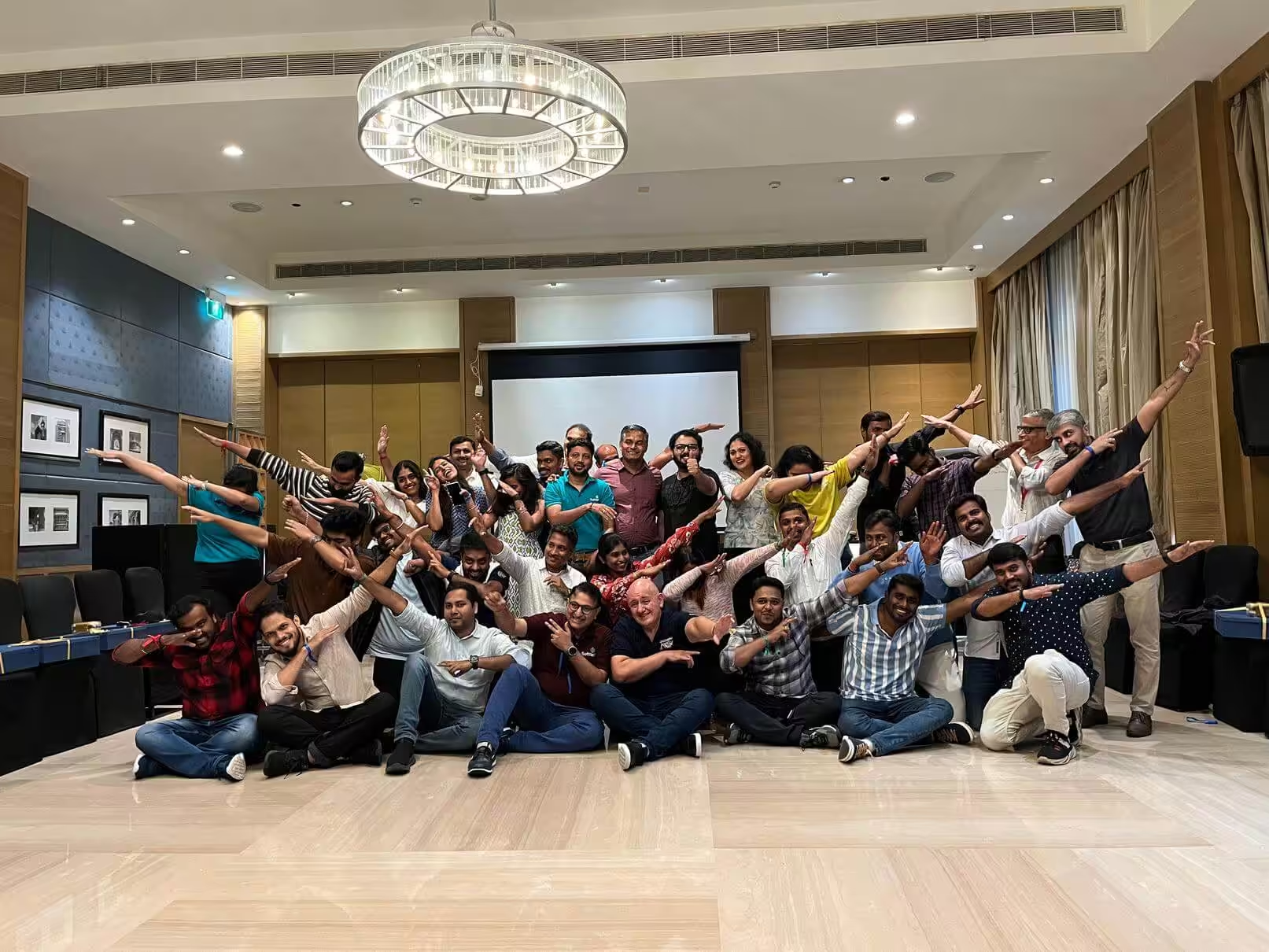
An offsite is usually handed to one person in HR or admin, with a date, a rough headcount and the words “make it good”. The hard part is not any single task. It is that forty small things have to happen in the right order, and the ones you forget only show up on the day.
This corporate offsite planning checklist puts those things in order, week by week, for a one or two day offsite in India with 20 to 300 people. The timings are suggestions based on how these events usually come together, so stretch them for bigger groups or flights.
First, decide what the offsite is for
Every other decision follows from this one. Write down the single most important outcome, in one line:
- A plan: the team leaves with next year’s priorities agreed. Most of the time goes to work sessions, and activities give people a break between them.
- A team that works together better: learning activities with a debrief take a bigger share of the agenda. Our outbound training programmes run over one or two days in this format.
- A thank-you: the team has had a hard year, and the offsite is a reward. Keep work sessions short and leave plenty of free time.
Then decide who must attend, and agree the rough split between work time and team time with whoever signs off the budget. That conversation is easier now than three days before the event.
The checklist, week by week
12 weeks before
- Write the one-line purpose and get it signed off.
- Agree the budget range and who approves spending.
- Estimate the headcount, and note anyone travelling from another city.
10 weeks before
- Pick two or three possible dates. Check them against quarter-end, festivals and school holidays.
- Shortlist destinations within the travel time you are willing to spend. A drive of two to three hours keeps the first and last day useful.
- Shortlist venues, and visit the top one if you can.
8 weeks before
- Book the venue, including a covered hall for the whole group and a separate room if you need breakouts.
- Book travel, or at least block seats and buses.
- Hold rooms, and agree when the final rooming list is due.
6 weeks before
- Draft the agenda with timed slots, and send it to the leaders who will run the work sessions.
- Choose the team activities and book the facilitators. Ask each one for a rain plan.
- Decide on any evening programme, and whether alcohol will be served.
4 weeks before
- Confirm the final headcount and send the rooming list.
- Collect diet needs (vegetarian, Jain, allergies) and access needs, and pass them to the venue.
- Issue travel tickets and share them with each person.
2 weeks before
- Write a run sheet: every slot, who leads it, where it happens and what is needed.
- Give each organiser a role for the day: arrivals, rooms, sessions, food, transport, emergencies.
- Confirm the rain plan and the sound set-up with the venue and the facilitators.
1 week before
- Send everyone one briefing mail: timings, the agenda, what to pack, dress code for the activities, the weather forecast and an emergency contact.
- Check the weather forecast for the destination on the India Meteorological Department (IMD) website or app, and again two days before.
The day before and on the day
- Walk through the venue: halls, lawns, the covered back-up space, toilets, exits, and the first aid room.
- Do a sound check in the main hall before people arrive.
- Keep the run sheet on one phone that the whole organising team can reach.
Choosing dates and a destination
In most of India, the cooler months are the easiest time for an offsite with outdoor activities. In summer, plan outdoor slots for the early morning or late afternoon. As a guide, this year’s heatwave guidelines for highway workers keep heavy outdoor work out of the hours from 12 noon to 4 pm (News On AIR, April 2026). The same afternoon sun applies to a team game. In the monsoon, treat outdoor activities as a bonus and build the agenda around the hall.
Travel time matters as much as the place. A long drive or flight eats into both days and tires people out. If your team is spread across cities, a destination with good flight connections may beat the one closest to head office. Our city pages for Goa and Jaipur list activities that suit those destinations.
Building the agenda
A common mistake is to fill every hour. People remember the free time on an offsite as much as the sessions. In my experience, an agenda with no gaps runs late by lunch on the first day. Here is a sample two-day agenda that leaves room to breathe:
| Time | Day 1 | Day 2 |
|---|---|---|
| Morning | Travel, arrive by 11:00, check in | Optional walk or yoga, breakfast |
| Late morning | Welcome and a 15 to 30 minute icebreaker | Work session |
| Lunch | Lunch | Lunch |
| After lunch | Work session | Learning activity with a debrief, 90 to 120 minutes |
| Late afternoon | Outdoor team activity, 60 to 90 minutes | Closing activity for the whole group, then leave |
| Evening | Dinner and free time |
For the icebreaker slot, our guide to quick icebreakers has ideas you can run yourself.
Activities that fit an offsite
Pep Olympics is a run of back-to-back team games put together for your venue, for 10 to 2,000 people in 45 to 120 minutes, and it works indoors or outdoors. The Ultimate Hustle sends teams around the resort on clues from a game app, in 60 to 90 minutes. If the offsite is in a city and you have a free afternoon, City Hustle: Amazing Race takes 2 to 4 hours across town.
-
 Pep Olympics
Pick a handful of fast-paced team challenges and dominate with your team's performance.
45 min to 2 hours 10 to 2,000 people
-
 The Ultimate Hustle (Scavenger Hunt)
Crack location-based clues and conquer team challenges in The Ultimate Hustle, Pepbox’s own twist on the scavenger hunt.
60 to 90 min 10 to 500 people
-
 City Hustle: Amazing Race
Turn left at the chai stall. Solve the riddle. Snap a team selfie.
2 to 4 hours 10 to 150 people
For a creative block, Movie Making has each team script, shoot and edit a short film on phones in 2 to 3 hours, for 20 to 100 people. The Big Collage is calmer: teams paint canvases that join into one artwork. To close the offsite with the whole group together, a drum circle takes 35 to 45 minutes, for groups from 10 to over 2,000 people. Our lists of team outing and outbound programme activities have more.
-
 Movie Making
‘Five stars! Gripping plot, questionable acting, unforgettable teamwork.’ That’s what audiences will say about your…
2 to 3 hours 20 to 100 people
-
 The Big Collage
Artists: Priya from HR, Rahul from Sales, Anjali from Finance and everyone else in the room.
1 to 2 hours 10 to 700 people
-
 Desi Team Games
Kho-Kho, Lagori and Gilli-Danda are back! Desi Games is Pepbox’s nostalgic team building twist on traditional Indian…
30 to 90 min 25 to 150 people
Safety, access and inclusion
- Heat and water: keep drinking water and shade near every outdoor activity, and move indoors if there is a heat warning.
- First aid: know where the first aid kit is, the name of the nearest hospital and how long it takes to get there.
- Exits: for larger groups, check that emergency exits in the hall are clear and that there is a microphone or PA system. The national crowd management guide (NDMA, 2014) is written for much larger gatherings, but its basics of clear exits, a PA system and a briefed team are good practice for any event.
- Food: plan vegetarian and Jain meals, label dishes, and tell the venue about allergies.
- Mobility and health: choose activities where everyone can take part, and tell the facilitators about anyone who is pregnant, injured or has limited mobility.
- Alcohol: follow your company policy and the rules of the state you are in, which differ. Keep active games well before the bar opens.
- Travel: plan safe travel for anyone arriving late or leaving early, especially people travelling alone.
After the offsite
Within a week, send the group what was decided, who owns each follow-up and when you will check on it. Add a short feedback form with three questions: what worked, what didn’t, and what should change next time. Most of what people say will be about the agenda, the food and the free time, and it will make the next offsite easier to plan.
If you would like help with the activity slots, send us the dates, the destination, the headcount and the agenda you have so far. We will suggest activities that fit each slot, with a rain plan for each.